John Newton (1714-1807AD)
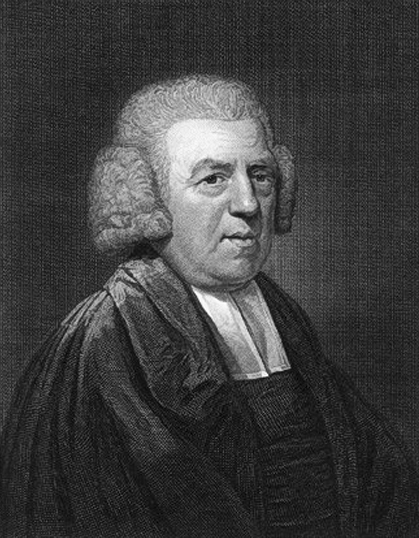
engraved
from a painting by Nathaniel Hone R.A. about 1769AD
JOHN NEWTON was born in London, July 24, 1725 and died there December 31, 1807. According to his excellent autobiography, in early life, as a sailor, he was foul-mouthed and impious, which led him to call himself towards the end of his life, the “old African blasphemer.” In Africa the slave-trader was himself a slave to slave-traders in a fearful humiliation, but, by the Providential hand of the Lord, escaping by ship for the long journey home, he was brought near death in a great storm when all seemed lost. He now prayed where before he blasphemed. From that moment a wonderful change came over him. From being a mocker of the Bible he now became its most ardent reader. John Newton the foul-mouthed blasphemer had been converted to Jesus Christ. It was not of his doing but by the grace of God. He faithfully taught this doctrine throughout the rest of his long life.
In England he decided on taking orders in the Church of England, and, after some difficulty, was ordained in 1764. He took a curacy at Olney in Buckinghamshire, a small town with which his name has ever since been connected. It was there that he became the friend and mentor of the poet William Cowper, who suffered from severe bouts of depression. There can be no doubt that Newton was a cheerful man, and that he helped Cowper during the poet's darkest moments. It should also be said that Cowper greatly inflluenced Newton's many letters of consolation and sermons of hope for those suffering doubts and afflictions.
After an exemplary ministerial course at Olney, Newton became rector of St. Mary Woolnoth, London, and lived to a great age, exercising much influence throughout the country as well as London, as much by his godly living as by his writings and sermons. He was also influential in helping to end the slave trade.
He was the main pillar of the Evangelical party in the Church of England, and gathered round him at his simple reunions in Hoxton, where he lived, Dissenting ministers as well as Established clergy. He was a prolific writer and the first edition of his complete Works came out 9 years after his death. But above all, he was the letter writer par excellence. His letters are full of wisdom and consolation as they expound the Word of God. His contributions to the famous Olney hymns (348 in number, of which 67 were Cowper's) rank high in English psalmody. “Amazing Grace” is one his best loved hymns.
The epitaph on his monument, written by himself, is very characteristic: “John Newton, clerk, once an infidel and libertine, a servant of slaves in Africa, was, by the rich mercy of our Lord and Saviour Jesus Christ, preserved, restored, pardoned, and appointed to preach the faith he had long laboured to destroy.”
Memoirs of John Newton (1mb) by Richard Cecil, 1830AD edition, pdf (602k) docx (198k)
Cardiphonia (Letters.)
1. Fourteen autobiographical Letters by John Newton. (337k) pdf (483k) docx (107k)
2. Twenty-six letters to a Nobleman. (369k) pdf (635k) docx (124k)
3. Seven Letters to the Reverend Mr. P--------. (125k) pdf (52k) docx (37k)
4. Eleven Letters to Mr. B-------, &c. (131k) pdf (84k) docx (41k)
5. Seven Letters to the Reverend Mr. P--------. (125k) pdf (52k) docx (37k)
6. Two letters to Miss P--------. (70k) pdf (26k) docx (23k)
7. Three Letters to Mrs. H--------. (75k) pdf (33k) docx (25k)
8. Eight Letters to Mrs. --------. (193k) pdf (109k) docx (55k)
9. Eight Letters to Rev. Mr. S-------. (180k) pdf (248k) docx (63k)
10. Apologia; or Four Letters to a Minister &c. (240k) pdf (187k) docx (75k)
11. Four Letters to Rev. Mr. R------- (105k) pdf (88k) docx (28k)
12. Fourteen Letters to Rev. Mr. B---------. (150k) pdf (77k) docx (44k)
13. Three Letters to Mrs. G---------. (95k) pdf (58k) docx (31k)
14. Two Letters to Miss F---------. (66k) pdf (24k) docx (22k)
15. Four Letters to the Rev Dr. ----------. (82k) pdf (27k) docx (24k)
16. Four Letters to Mrs. T--------. (91k) pdf (42k) docx (30k)
17. One letter to the Rev. Mr. O--------. (66k) pdf (44k) docx (20k)
18. Seven Letters to Rev. Mr. P--------. (121k) pdf (73k) docx (36k)
19. Eight Letters to Rev. Mr.--------. (124k) pdf (61k) docx (36k)
20. Four Letters to Mrs. P. (108k) pdf (23k) docx (31k)
21 Six Letters to Rev. Mr. B---------. (116k) pdf (122k) docx (35k)
22 Nine Letters to Rev. Mr. B---------. (132k) pdf (114k) docx (38k)
FORTY-ONE LETTERS ON RELIGIOUS SUBJECTS.
ORIGINALLY PUBLISHED UNDER THE SIGNATURES OF OMICRON AND VIGIL.
Letter 1. On Trust in the Providence of God, and Benevolence to his Poor. (46k) pdf (43k)
Letter 2. To a Student in Divinity. (45k) pdf (43k)
Letter 3. "Judgement-Seat of Christ" (67k) from 2 Cor. v. 10 pdf (32k)
Letter 4. To Theron, on Family Worship. (72k) pdf (45k) docx (25k)
Letter 5. On the Snares and Difficulties attending the Ministry of the Gospel. (44k) pdf (46k)
Letter 6. On the Practical Influence of Faith. (72k) pdf (36k)
Letter 7. On the Propriety of a Ministerial Address to the Unconverted. (49k) pdf (49k)
Letter 8. On the Inward Witness to the Ground and Reality of Faith. (69k) pdf (37k)
Letter 9. On the Doctrines of Election and Final Perseverance. (70k) pdf (44k) docx (27k)
Letter 10. A; or, Grace in the Blade. Mark 4:28. (75k) pdf (38k) docx (26k)
Letter 11. B; or, Grace in the Blade. Mark 4:28. (70k) pdf (46k) docx (24k)
Letter 12. C; or, Grace in the Blade. Mark 4:28. (87k) pdf (53k) docx (28k)
Letter 13. On Hearing Sermons. (77k) pdf (50k) docx (26k)
Letter 14. On Temptation. (53k) pdf (55k)
Letter 15. A Plan of a Compendious Christian Library. (82k) pdf (69k) docx (27k)
Letter 16. On the Inefficacy of our Knowledge. (76k) pdf (64k) docx (26k)
Letter 17. On a Believer's Frames. (79k) pdf (64k) docx (26k)
Letter 18. Thoughts on the Exercise of Social Prayer. (74k) pdf (50k) docx (25k)
Letter 19. On Controversy. (74k) pdf (50k) docx (24k)
Letter 20. On Conformity to the World. (76k) pdf (24k) docx (24k)
Letter 21. "I was once blind but now I can see." (74k) pdf (48k) docx (25k)
Letter 22. On the Advantages of a State of Poverty. (87k) pdf (92k) docx (27k)
Letter 23. On Simplicity and Sincerity. (75k) pdf (20k) docx (25k)
Letter 24. On Communion with God. (74k) pdf (23k) docx (23k)
Letter 25. On Faith, and the Communion of Saints (73k) pdf (60k) docx (25k)
Letter 26. On the Gradual Increase of Gospel-Illumination. (61k) pdf (52k) docx (21k)
Letter 27. On Communion with Christ. (57k) pdf (23k) docx (20k)
Letter 28. In What Manner are we to Expect the Lord's Promised Guidance? (47k) pdf (48k)
Letter 29. Thoughts on Rom. viii. 19, 20, 21. (45k) pdf (48k)
Letter 30. On the Right Use of the Law. (85k) pdf (72k) docx (26k)
Letter 31. On Love to the Brethren. (130k) pdf (86k)
Letter 32. On Candour. (74k) pdf (60k) docx (26k)
Letter 33. (1.) On Man and his Fallen Estate. (75k) pdf (62k) docx (26k)
Letter 34. (2.) On Man and his Fallen Estate. (72k) pdf (61k) docx (25k)
Letter 35. Whatsoever Things are Lovely . . . Phil. 4:8. (74k) pdf (62k) docx (26k)
Letter 36. To a Gay Friend on his Recovery from Illness. (65k) pdf (54k) docx (23k)
Letter 37. Some Points of Christian Experience Considered. (85k) pdf (68k) docx (30k)
Letter 38. That True Religion is Necessary . . . (71k) pdf (31k) docx (24k)
Letter 39. A Word in Season. (81k) pdf (33k) docx (25k)
Letter 40. A Word to Professors in Trade. (81k) pdf (54k) docx (24k)
Letter 41. On the Ministry of Angels. (69k) pdf (62k) docx (25k)
20 SERMONS preached in the parish church of Olney, Buckinghamshire.
Sermon 1 The Small Success of a Gospel-Ministry. (119k) Mat. xi. 25. pdf (52k) docx (32k)
Sermon 2 The Mysteries of the Gospel Hid from Many. (130k) Mat. xi. 25. pdf (59k) docx (33k)
Sermon 3 Of Those from Whom the Gospel-Doctrines are Hid. (109k) Mat. xi. 25. pdf (36k) docx (29k)
Sermon 4 The Nature of Spiritual Revelation . . ., (102k) on Mat. xi. 25, pdf (35k) docx (28k)
Sermon 5 The Sovereignty of Divine Grace Asserted and Illustrated. (105k) Mat. xi. 26. pdf (36k) docx (28k)
Sermon 6 Of the Person of Christ. (117k) Mat. xi. 27. pdf (70k) docx (33k)
Sermon 7 Of the Authority of Christ. Mat. xi. 27. pdf (37k) docx (31k)
Sermon 8 The Glory and Grace of God Revealed in Jesus Christ. (126k) Mat. xi. 27. pdf (56k) docx (31k)
Sermon 9 Labouring and Heavy-Laden Sinners Described. (105k) Mat. xi. 28. pdf (34k) docx (28k)
Sermon 10 Of Coming to Christ. (114k) Mat. xi. 28. pdf (38k) docx (30k)
Sermon 11 Of Believers Rest in Christ. (108k) Mat. xi. 28. pdf (57k) docx (30k)
Sermon 12 Of the Yoke of Christ. (116k) Mat. xi. 29. pdf (45k) docx (31k)
Sermon 13 The Service of Christ Easy and Pleasant. (111k) Mat. xi. 30. pdf (39k) docx (29k)
Sermon 14 Believers Cautioned Against Misconduct in their Profession. (102k) Rom. 14:16. pdf (41k) docx (29k)
Sermon 15 The Extent and Sanction of the Third Commandment. (114k) Exod. 20:7. pdf (41k) docx (30k)
Sermon 16 The Christian Life Compared to a Race. (101k) 1 Cor. 9:24. pdf (36k) docx (28k)
Sermon 17 No Access to God but by the Gospel of Christ. (102k) Micah 6:6-8. pdf (39k) docx (29k)
Sermon 18 Of a Living and Dead Faith. (118k) James 2:26. pdf (41k) docx (32k)
Sermon 19 Guilt Removed, and Peace Restored. (137k) Psalm 51:15. pdf (55k) docx (36k)
Sermon 20. Of the Assurance of Faith. (132k) 1 John 5:19. pdf (79k) docx (33k)
Discourses & Sermons.
1. On the Deceitfulness of the Human Heart. (104k) On Jeremiah 17:9-10. pdf (73k) docx (35k)
2. The Subject and Temper of the Gospel-Ministry. (62k) pdf (108k) docx (15k)
3. The Guilt and Danger of such a Nation as this. (91k) pdf (120k) docx (28k)
4. On the Saviour and His Salvation. (122k) pdf (70k) docx (34k)
50 Expository Discourses on Scriptural Passages from Handel's "Messiah."
1. The Consolation. (102k) pdf (44k) docx (34k)
2. The Harbinger. (105k) pdf (39k) docx (31k)
3. The Shaking of the Heavens and the Earth. (87k) pdf (29k) docx (26k)
4. The Lord Coming to His Temple. (104k) pdf (40k) docx (30k)
5. Immanuel. (103k) pdf (40k) docx (30k)
6. Salvation Published from the Mountains. (87k) pdf (60k) docx (27k)
7. The Morning Light. (93k) pdf (62k) docx (29k)
8. The Sun Rising Upon a Dark World. (114k) pdf (34k) docx (39k)
9. Characters and Names of Messiah. (88k) pdf (61k) docx (28k)
10. The Angel's Message and Song. (94k) pdf (46k) docx (30k)
11. Messiah's Entrance into Jerusalem. (83k) pdf (44k) docx (27k)
12. Effects of Messiah's Appearance. (83k) pdf (42k) docx (27k)
13. The Great Shepherd. (94k) pdf (47k) docx (30k)
14. Rest for the Weary. (87k) pdf (42k) docx (26k)
15. Messiah's Easy Yoke. (85k) pdf (37k) docx (29k)
16. The Lamb of God, the Great Atonement. (96k) pdf (48k) docx (29k)
17. Messiah Despised and Rejected of Men. (107k) pdf (31k) docx (37k)
18. Voluntary Suffering. (82k) pdf (43k) docx (26k)
19. Messiah Suffering and Wounded for Us. (86k) pdf (44k) docx (27k)
20. Sin Charged upon the Surety. (86k) pdf (41k) docx (26k)
21. Messiah Derided upon the Cross. (78k) pdf (50k) docx (26k)
22. Messiah Unpitied and without Comforter. (91k) pdf (37k) docx (26k)
23. No Sorrow Like Messiah's Sorrow. (92k) pdf (37k) docx (27k)
24. Messiah's Innocence Vindicated. (80k) pdf (47k) docx (26k)
25. Messiah Rising fron the Dead. (80k) pdf (50k) docx (25k)
26. The Ascension of Messiah to Glory. (82k) pdf (83k) docx (26k)
27. Messiah the Son of God. (86k) pdf (48k) docx (28k)
28. Messiah Worshipped by Angels. (82k) pdf (108k) docx (27k)
29. Gifts Received for the Rebellious. (84k) pdf (50k) docx (28k)
29. The Publication of the Gospel. (83k) pdf (69k) docx (26k)
31. The Gospel-Message, Glad Tidings. (84k) pdf (84k) docx (28k)
32. The Progress of the Gospel. (97k) pdf (82k) docx (35k)
33. Opposition to Messiah Unreasonable. (91k) pdf (82k) docx (32k)
34. Opposition to Messiah in Vain. (82k) pdf (47k) docx (29k)
35. Opposition to Messiah Ruinous. (79k) pdf (47k) docx (31k)
36. The Lord Reigneth. (89k) pdf (84k) docx (32k)
37.
The Extent of Messiah's Spiritual Kingdom.
(96k) pdf (93k)
docx (32k)
38.
King of Kings and Lord of Lords.
(85k) pdf (70k)
docx (29k)
39. Job's Faith and Expectation. (100k) pdf (77k) docx (33k)
40. The Lord is Risen Indeed. (90k) pdf (55k) docx (31k)
41. Death by Adam, Life by Christ. (90k) pdf (75k) docx (31k)
42. The General Resurrection. (94k) pdf (74k) docx (32k)
43. Death Swallowed up in Victory. (101k) pdf (33k) docx (32k)
44. Triumph over Death and the Grave. (88k) pdf (75k) docx (31k)
45. Divine Support and Protection. (104k) pdf (42k) docx (33k)
46. Accusers Challenged. (104k) pdf (44k) docx (34k)
47. The Intercession of Christ. (96k) pdf (41k) docx (33k)
48. The Song of the Redeemed. (108k) pdf (56k) docx (37k)
49. The Chorus of Angels. (94k) pdf (45k) docx (33k)
50. The Universal Chorus. (100k) pdf (26k) docx (35k)